

Your shopping cart is empty!
×
Price:
$6.00 $5.50
Ex Tax: $4.78
Qty:

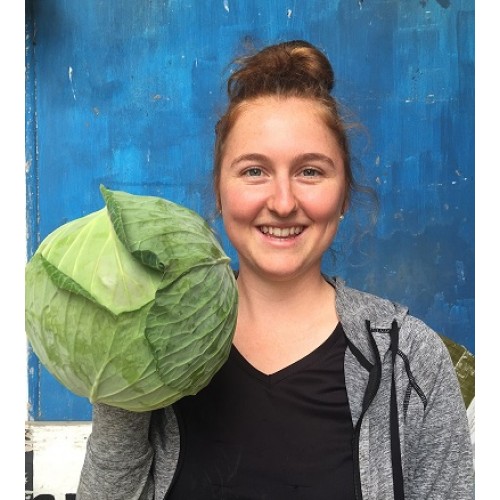
A "super" vegetable... eat at least once a week.
Cabbages have high nutrition & vitamin levels.
A good anti-aging vegetable with vitamins B1,B6,C,D&K, as well as beta-carotene.
Research shows that it can help with Blood Pressure, Stomach Ulcers, & can lower the risk of some cancers.
Keep cabbage cold... it helps to retain its vitamin content.
Cabbage contains the mineral calcium necessary for normal teeth & bones.
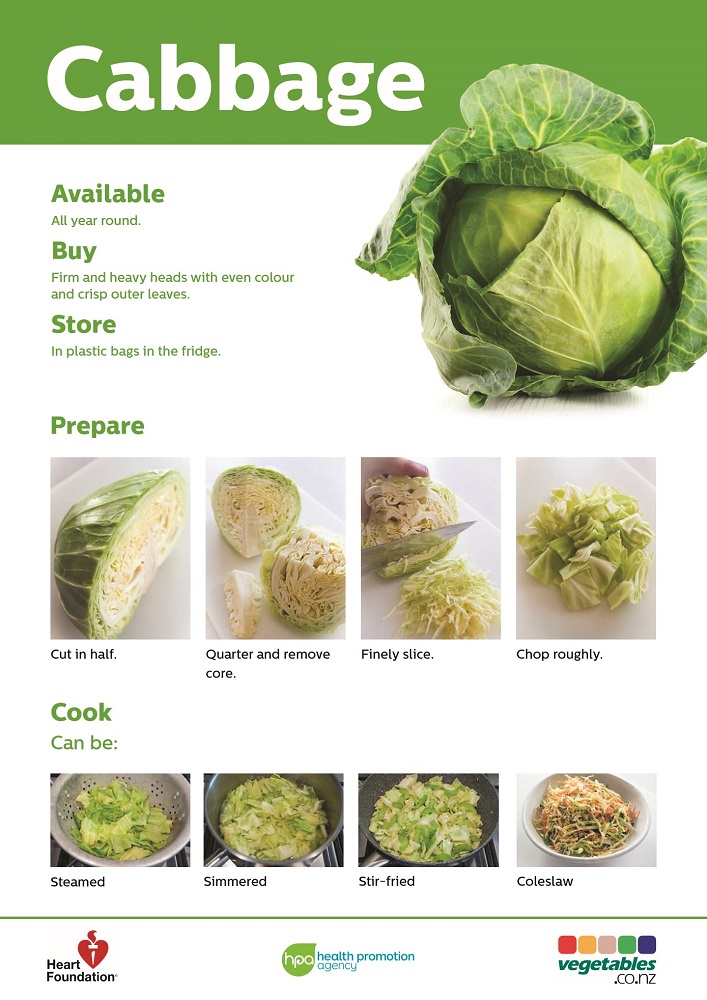
If you cook Cabbage, steam it lightly (5 minutes or less) to retain the phytonutrients & maximise their availability to preserve the health benefits.
To preserve Cabbage's beneficial compounds at maximum levels, experts recommend eating Cabbage raw.
Next time you're cooking Cabbage, add a Celery stalk to the pot as this helps neutralise the powerful odour.
Or simply cook the Cabbage quicker, stir-frying it in a Wok rather than boiling it for a long time.
Try olive oil & lemon juice on coleslaw instead of mayonnaise
To give cabbage a lift, try coriander, curry spices, nutmeg, ginger & allspice, along with herbs such as mint, dill, fennel, parsley, thyme, celery seed, garlic & chives.
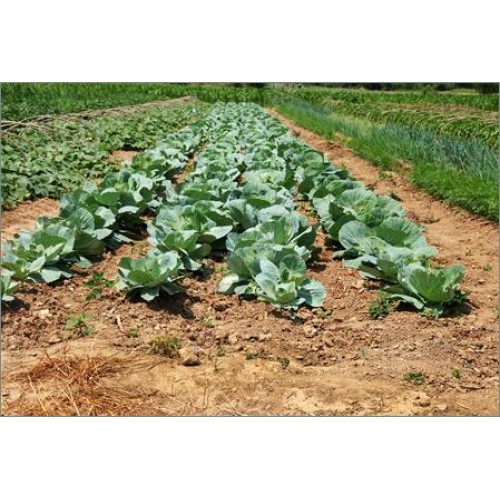
Grown year round at the Onion Vegie Place Katikati
Click Here:
Cabbage Recipes
| Nutrition Information | ||||
| Serving size: 1 cup chopped 79g | ||||
|
Average Quantity per serving |
% Daily intake per serve |
Average Quantity per 100g |
||
| Energy (kJ/Cal) | 128/31 | 1.50% | 162/39 | |
| Protein (g) | 0.99 | 1.98% | 1.25 | |
| Fat, total (g) | 0.158 | 0.02% | 0.2 | |
| - saturated (g) | 0.02 | 0.01% | 0.026 | |
| Carbohydrate (g) | 4.85 | 1.56% | 6.14 | |
| - sugars (g) | 4.82 | 5.36% | 6.1 | |
| Dietary fibre (g) | 2.84 | 9.5% | 3.6 | Contains dietary fibre |
| Sodium (mg) | 3.95 | 0.02% | 5 | |
| Vitamin E (mg) | 0.008 | trace | 0.01 | |
| Vitamin C (mg) | 16.59 | 41.5% RDI* | 21 | A good source of vitamin C |
| Potassium (mg) | 169.85 | 215 | ||
| Folate (µg) | 12.64 | 6.32% RDI* | 16 | |
| Vitamin B6 (mg) | 0.08 | 5% RDI* | 0.1 | |
| Calcium (mg) | 31.98 | 4% RDI* | 41 | |
| Thiamin (mg) | 0.04 | 3.6% RDI* | 0.05 | |
| Iron (mg) | 0.32 | 2.7% RDI* | 0.4 | |
| Niacin (mg) | 0.24 | 2.4% RDI* | 0.31 | |
| Riboflavin (mg) | 0.03 | 1.8% RDI* | 0.04 | |
| Zinc (mg) | 0.09 | 0.8% RDI* | 0.12 | |
| Selenium (µg) | 0.08 | 0.7% RDI* | 0.1 | |
| Vitamin A Equiv. (µg) | 1.45 | 0.2% RDI* | 1.84 | |
|
Percentage Daily Intakes are based on an average adult diet of 8700 kJ |
||||
|
Source: The Concise New Zealand Food Composition Tables, 10th Edition, Plant & Food Research - 2014 |
||||